

AI for LCA Automation: Real‑Time Data, NLP & Predictive Impact Modeling
Automate the Inventory. Predict the Impact. Scale the Sustainability
Skills you will gain:
About Program:
AI for LCA Automation: Real‑Time Data, NLP & Predictive Impact Modeling is a 3-day professional certification workshop designed to transform traditional Life Cycle Assessment (LCA) into an AI-driven process. Using 100% free, open-source Python tools, participants will learn to automate data ingestion, monitor real-time environmental impacts, and forecast sustainability outcomes.
Aim: To empower professionals with AI, NLP, and predictive analytics tools to automate and optimize Life Cycle Assessment (LCA) for efficient, real-time sustainability monitoring and decision-making.
Program Objectives:
- Automate data extraction using AI and NLP.
- Enable real-time environmental impact monitoring.
- Apply predictive modeling for impact forecasting and lifecycle optimization.
- Provide hands-on experience with Python-based projects.
- Enhance LCA practices for efficient, data-driven sustainability decisions.
What you will learn?
Day 1 | Intelligent Data Ingestion & NLP for Inventory (LCI)
- Focus: Automating the transition from unstructured text to structured sustainability data.
- The Future of LCI: Moving beyond manual data entry to “Plug-and-Play” automated inventories.
- Scientific Text Mining: Using Natural Language Processing (NLP) to extract material flows and energy requirements from technical reports and papers.
- Data Standardization: Automated unit conversion and nomenclature mapping using Python logic.
- Building Scalable Databases: Structuring extracted data for seamless integration into LCA software.
- Hands-on: Project: The Automated Material Parser. Use Python’s Spacy library to automatically identify and extract material quantities and process parameters from raw technical summaries.
Day 2 | Dynamic Monitoring & Real-Time Impact Dashboards
- Focus: Bridging the gap between live industrial data and environmental impact assessment.
- LCA in Motion: Implementing “Live LCA” methodologies for continuous environmental monitoring.
- API Integration: Connecting LCA models to open-source APIs (e.g., electricity grid intensity, supply chain feeds).
- Temporal Impact Assessment: Understanding how time-of-use and regional energy mixes shift carbon footprints in real-time.
- Visualizing ESG Metrics: Building interactive, professional-grade dashboards for stakeholders.
- Hands-on: Project: The Real-Time Carbon Dashboard. Use Pandas and Plotly to build a live-updating tracker that calculates the CO2 footprint of a process based on current energy grid data.
Day 3 | Predictive Analytics & AI-Driven Design Optimization
- Focus: Leveraging Machine Learning to forecast impacts and optimize product lifecycles.
- Predictive Impact Modeling: Using historical data to estimate the environmental scores of new products before production begins.
- Smart Material Substitution: Using AI logic to suggest lower-impact alternatives based on performance requirements.
- Sensitivity & Risk Analysis: Automated identification of “Hotspots” and future environmental risks (e.g., 2030 carbon tax scenarios).
- Strategic Decision Support: Transitioning from “Assessment” to “Automation” in corporate sustainability strategy.
- Hands-on: Project: The ‘What-If’ Scenario Predictor. Build a moderate-level regression model using Scikit-Learn to forecast the Global Warming Potential (GWP) of a product based on its design parameters.
Mentor Profile
Fee Plan
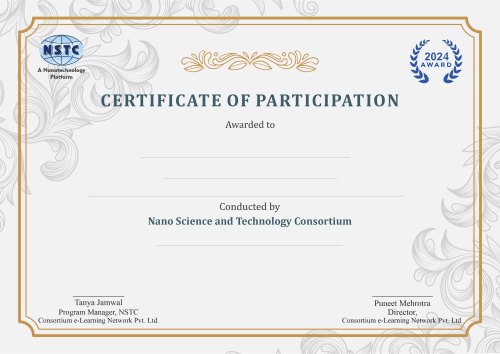
Get an e-Certificate of Participation!
Intended For :
- Researchers and Academics in environmental science, sustainability, or data analysis.
- Professionals in environmental management, sustainability, and product development.
- Data Scientists and Engineers interested in applying AI to sustainability.
- LCA Practitioners seeking to automate and optimize workflows.
Career Supporting Skills
Program Outcomes
- Proficiency in automating data ingestion and structuring sustainability data.
- Ability to build real-time environmental impact dashboards.
- Skills to apply predictive analytics for optimizing product lifecycles.
- Hands-on experience with Python tools for LCA automation.
- Enhanced decision-making capabilities for sustainable practices using AI-driven LCA.