

Computational Drug Discovery & Intensive Genomics
Accelerating Therapeutics Discovery with Computational Tools and Genomic Insights.
Skills you will gain:
About Program:
This workshop integrates genomic data analysis and computational drug discovery workflows to guide participants through essential steps like target identification, molecular docking, and drug optimization. The program will focus on applying bioinformatics, machine learning, and molecular simulation tools to understand complex biological systems and discover new drug candidates.
Aim: This workshop focuses on the intersection of computational drug discovery and genomics to accelerate the development of effective therapeutics. Participants will learn how to apply genomic data and computational tools to predict drug efficacy, target identification, and biomarker discovery.
Program Objectives:
- Understand computational drug discovery and its role in modern pharma.
- Learn the process of target identification using genomic and computational tools.
- Apply molecular docking and virtual screening to predict drug-target interactions.
- Utilize machine learning to optimize drug candidates.
What you will learn?
Day 1: Genomics Data Processing & ML Foundations
- Retrieval and preprocessing of genomic datasets from NCBI GEO / ENA
- (FASTQ/FASTA formats)
- Quality control and trimming using FastQC and preprocessing pipelines
- Feature extraction from sequences (k-mers, GC content, embeddings)
- Encoding biological sequences using one-hot, k-mer vectors, and transformer
- embeddings
- Dimensionality reduction using PCA / t-SNE / UMAP on genomic features
- Classification of gene sequences using SVM / Random Forest models
- Variant analysis and SNP classification using ML pipelines
- Building a basic genomic prediction model (disease vs normal classification)
Day 2: Machine Learning in Drug Discovery
- Retrieval and curation of chemical datasets from PubChem / ChEMBL
- Molecular descriptor calculation using RDKit (physicochemical properties)
- Conversion of molecules into fingerprints (ECFP, MACCS)
- QSAR modeling using regression/classification ML models
- Drug-target interaction prediction using matrix factorization / ML models
- Training ML models for binding affinity prediction (regression tasks)
- Virtual screening using ML-based filtering of compound libraries
- Model evaluation using ROC-AUC, precision-recall, RMSE metrics
Day 3: Integrated AI Pipelines & Advanced Applications
- Integration of genomic & chemical data for target identification
- Multi-omics data fusion using ML-based feature integration techniques
- Building a drug response prediction model using genomic signatures
- Implementation of deep learning models (CNNs for sequence analysis)
- Training a Graph Neural Network (GNN) for molecular property prediction
- Explainability using SHAP / feature importance in biological models
- End-to-end pipeline: target identification → lead prediction → validation
- Deployment of ML models using Streamlit / API for real-time predictions
Mentor Profile
Fee Plan
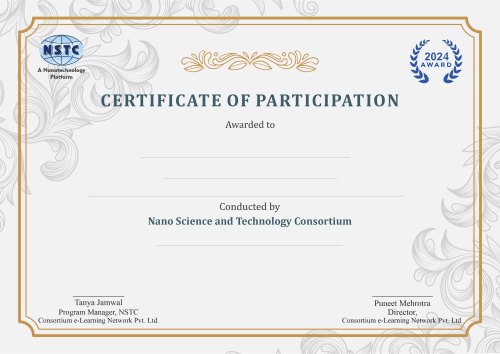
Get an e-Certificate of Participation!
Intended For :
Career Supporting Skills
Program Outcomes
Participants will be able to:
- Apply genomic data to drug discovery workflows.
- Build predictive models for drug-target interactions.
- Perform molecular docking and optimize lead candidates.
- Integrate machine learning to predict drug efficacy.
- Use computational tools to analyze and visualize genomic and drug-related data.