
New Year Offer End Date: 30th April 2024

Program
Air Quality AI: Spatiotemporal Fusion, Concept Drift & Forecasting
Skills you will gain:
About Program:
Designed for researchers, professionals, and learners, this workshop focuses on measuring air quality parameters, identifying sensor drift, and detecting environmental anomalies using data-driven methods.
Aim: To provide participants with a strong understanding of air quality analytics by focusing on accurate measurement techniques, sensor drift identification, and intelligent detection methods for reliable environmental monitoring and data-driven decision-making.
Program Objectives:
- Understand key air quality parameters and monitoring methods.
- Learn the basics of sensor drift and its impact on data accuracy.
- Explore methods for drift analysis, calibration, and correction.
- Identify pollution patterns and anomalies using analytics.
- Apply air quality data for effective environmental monitoring and decision-making.
What you will learn?
Day 1 | MEASURE — High-Fidelity Data Acquisition & Preprocessing
- The Low-Cost Sensor (LCS) Revolution: Reviewing current scientific literature trends and addressing the physical constraints that cause hardware data inaccuracies.
- Spatiotemporal Data Fusion: Integrating highly accurate but sparse reference stations with dense, localized IoT sensor arrays.
- Advanced Feature Engineering: Moving beyond simple averages to encode complex temporal features, including sinusoidal transformations for seasonality and meteorological proxies.
- Data Quality & Preprocessing: Handling noisy readings, missing values, calibration inconsistencies, and sensor-level variability for robust environmental analytics.
- Hands-on: Notebook Lab: Build an automated multi-sensor data pipeline in Google Colab, handle heavy outliers, and apply advanced iterative imputation for missing air quality readings.
Day 2 | DRIFT — Concept Drift & Sensor Recalibration
- The Silent Killer of Accuracy: Defining Concept Drift in environmental monitoring and analyzing structural variations in non-stationary air quality environments.
- Drift Detection Methodologies: Implementing statistical tests and adaptive algorithms to recognize when a model’s operating environment has fundamentally changed.
- Modern Mitigation Strategies: Contrasting global calibration models against dynamic importance weighting to update edge models remotely.
- Remote Recalibration Workflows: Designing practical model maintenance strategies for long-term IoT-based air quality monitoring deployments.
- Hands-on: Notebook Lab: Execute a Concept Drift detection algorithm, such as ADWIN, on a live-simulated PM2.5 data stream to trigger automated recalibration.
Day 3 | DETECT — Deep Learning for Pollution Forecasting & Event Detection
- State-of-the-Art Forecasting: Transitioning from standard regression to advanced sequence modeling, including Gated Recurrent Units (GRUs) and Temporal Fusion Transformers.
- Unsupervised Anomaly Detection: Using tree-based ensembles and autoencoders to identify localized pollution events, including smog spikes and industrial leaks.
- Bridging Code to Paper: Structuring experiments, baselines, visualizations, and evaluation metrics to meet rigorous peer-review standards in environmental research.
- Actionable AQI Intelligence: Translating predictive outputs into interpretable alerts, short-term risk forecasts, and decision-support insights.
- Hands-on: Notebook Lab: Train a lightweight Recurrent Neural Network (RNN) or gradient-boosted model such as XGBoost to generate an actionable 24-hour localized Air Quality Index (AQI) forecast.
Mentor Profile
Fee Plan
INR 1999 /- OR USD 50
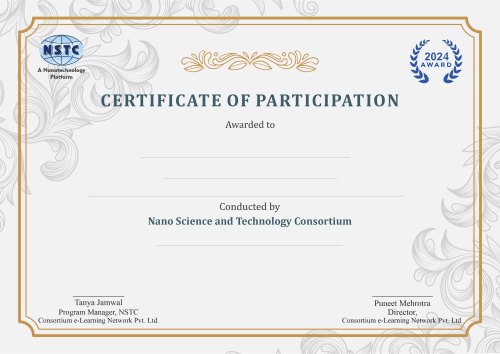
Get an e-Certificate of Participation!
Intended For :
- Students and early researchers in environmental science or data analytics
- Ph.D. scholars, researchers, and academicians
- Environmental engineers and air quality professionals
- AI/ML and data science practitioners working with sensor data
- IoT professionals involved in environmental monitoring
- Industry professionals in sustainability, smart cities, and pollution control
Career Supporting Skills
Program Outcomes