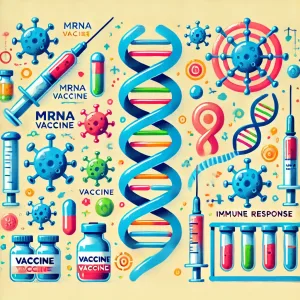
About the Vaccinology Course
Program Highlights
Course Curriculum
Module 1: Principles of Immunity in Vaccinology
- Innate and adaptive immune responses
- Antigen presentation and memory formation
- Types of immunity: active, passive, herd
Module 2: Types and Platforms of Vaccines
- Live attenuated, inactivated, subunit, toxoid, conjugate vaccines
- Recombinant and DNA/RNA-based vaccines
- Vector-based and peptide vaccines
Module 3: Antigen Discovery and Vaccine Design
- Epitope mapping and reverse vaccinology
- Use of AI in antigen prediction
- Bioinformatics databases (IEDB, Vaxign)
Module 4: Adjuvants and Formulation Technologies
- Common adjuvants: Alum, AS01, MF59, CpG
- Role of nanotechnology in vaccine delivery
- Stability, storage, and thermostability challenges
Module 5: Preclinical Testing and Model Systems
- Animal models in immunogenicity and safety assessment
- Immunoassays: ELISA, neutralization tests, cytokine profiling
- Toxicology and biodistribution
Module 6: Clinical Trial Phases and Design
- Phase I–IV vaccine trial structure
- Placebo controls, blinding, and trial randomization
- Trial endpoints: safety, efficacy, immunogenicity
Module 7: Global Regulatory Pathways
- WHO prequalification and Emergency Use Authorization (EUA)
- FDA, EMA, DCGI/CDSCO roles
- Good Clinical Practice (GCP), GMP, and vaccine approval process
Tools, Techniques, or Platforms Covered
Jupyter Notebook
Google Colab
Microsoft Excel
Relevant Online Databases
Real-World Applications
- Apply Vaccinology skills directly to academic research, thesis work, and publications
- Build a professional portfolio showcasing practical Science & Technology competencies
- Solve industry-relevant problems using Vaccinology methodologies and tools
- Contribute to open-source projects and collaborative research in Science & Technology
- Prepare for competitive examinations, interviews, and professional certifications in Science & Technology
Who Should Attend & Prerequisites
- Students pursuing degrees in Science & Technology, science, engineering, or related disciplines
- Working professionals seeking to upskill or transition into Science & Technology roles
- Researchers and academicians looking to adopt modern techniques in Science & Technology
- Entrepreneurs, freelancers, and self-learners interested in practical Science & Technology knowledge
Prerequisites: Some familiarity with basic concepts in Science & Technology will be helpful but is not mandatory. A willingness to learn and engage with hands-on exercises is essential.