
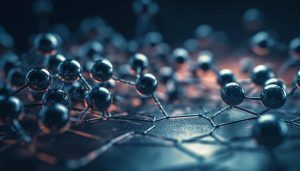
Green Synthesis of Nanoparticles and their Biomedical Applications
USD $59.00 USD $249.00Price range: USD $59.00 through USD $249.00
Aim: The aim of a workshop is to provide participants with a focused and immersive learning experience aimed at developing specific skills, enhancing knowledge, or addressing particular challenges. Workshops are structured to offer practical insights, hands-on training, and interactive discussions, tailored to achieve predefined objectives. Whether concentrating on skill development, problem-solving, innovation, or education, the overarching goal is to equip attendees with actionable tools, strategies, and a deeper understanding within a defined subject area, encouraging active engagement and empowering participants to apply their newfound expertise in their professional or personal pursuits.
Aim
This program trains participants to design and evaluate green-synthesized nanoparticles and connect them to biomedical applications such as antimicrobial systems, drug delivery, imaging/diagnostics, wound care, and biosensing. You’ll learn eco-friendly synthesis routes (plant/microbe/biopolymer-mediated), reaction optimization, characterization, and safety/translation fundamentals—so you can develop responsible nanomaterials for healthcare.
Program Objectives
- Understand Green Nanotechnology: Why greener synthesis matters for toxicity, scalability, and sustainability.
- Learn Bio-mediated Synthesis Routes: Plant extracts, microbes, enzymes, and biopolymer-assisted synthesis.
- Control Nanoparticle Properties: Tune size, morphology, stability, and surface chemistry via process parameters.
- Characterize Nanoparticles Correctly: UV–Vis, DLS/zeta, FTIR, XRD, SEM/TEM basics and interpretation.
- Link Design to Biomedical Use: Match material + size + surface properties to antimicrobial/therapeutic needs.
- Evaluate Safety & Performance: Intro to biocompatibility, cytotoxicity, hemocompatibility, and antimicrobial assays.
- Hands-on Application: Build a mini project: green synthesis plan + characterization + application rationale.
Program Structure
Module 1: Fundamentals of Green Synthesis & Nanoparticle Design
- Why “green synthesis” in nanomedicine: cost, safety, solvent reduction, waste minimization.
- Nanoparticle basics: nucleation/growth, stabilization, aggregation, surface chemistry (conceptual).
- Key nanoparticle classes: Ag/Au, ZnO, TiO2, Fe3O4, and polymer/biopolymer NPs (overview).
- Design constraints for biomedical use: purity, reproducibility, endotoxins (conceptual), and dose.
Module 2: Green Synthesis Pathways (Plants, Microbes, Biopolymers)
- Plant extract-mediated synthesis: phytochemicals as reducing and capping agents.
- Microbial synthesis: bacteria/fungi/algae routes (intracellular vs extracellular concepts).
- Biopolymer-assisted routes: chitosan, alginate, cellulose derivatives (intro).
- Choosing precursors, solvents, and stabilizers for safer formulations.
Module 3: Process Optimization & Reproducibility
- Critical parameters: pH, temperature, time, precursor concentration, extract ratio.
- Controlling size/morphology: how parameter shifts change outcomes.
- Batch-to-batch variation: standardizing extract prep and documenting protocols.
- Basic experimental design mindset for optimization (intro-level).
Module 4: Characterization Toolkit (What Each Technique Really Proves)
- UV–Vis: plasmon peaks and reaction tracking (interpretation-focused).
- DLS and zeta potential: size distribution, stability, and common pitfalls.
- FTIR: functional groups and evidence of capping/biomolecules.
- XRD: crystallinity and phase identification basics.
- SEM/TEM: morphology, core size vs hydrodynamic size—how to reconcile results.
Module 5: Formulation Stability & Surface Functionalization (Intro)
- Colloidal stability: aggregation, ionic strength, storage effects.
- Dispersion strategies and biocompatible stabilizers (conceptual).
- Surface modification basics: charge tuning, ligand concepts, polymer coatings.
- Sterility and contamination awareness for biomedical testing (intro-level).
Module 6: Biomedical Applications I — Antimicrobial, Wound Care & Coatings
- Mechanisms: ROS, membrane disruption, ion release (conceptual and evidence-based discussion).
- Assays overview: zone of inhibition, MIC/MBC concepts, biofilm basics.
- Wound dressings and hydrogels: integrating NPs into matrices (intro-level).
- Antimicrobial coatings for devices/surfaces: performance vs safety trade-offs.
Module 7: Biomedical Applications II — Drug Delivery, Imaging & Biosensing
- Drug delivery concepts: loading, release, targeting (intro-level; no clinical claims).
- Bioimaging basics: contrast mechanisms and nanoparticle selection rationale (conceptual).
- Biosensors: nanoparticle-enabled signal enhancement and surface functionalization (intro).
- Matching design parameters to application constraints (size, charge, stability, toxicity).
Module 8: Safety, Ethics, Translation & Avoiding Overclaims
- Biocompatibility basics: cytotoxicity, hemocompatibility, inflammation signals (conceptual).
- Toxicology factors: size, dose, surface chemistry, impurities, and biodistribution (intro).
- Quality and documentation: what makes “green-synthesized” claims credible.
- Responsible communication: limits of in vitro results and avoiding greenwash/health overclaims.
Final Project
- Design a green synthesis protocol for a chosen nanoparticle (e.g., AgNPs, AuNPs, ZnO, Fe3O4).
- Define optimization plan (parameters, controls, reproducibility checklist).
- Propose a characterization workflow and expected outputs.
- Map to one biomedical application with a realistic performance + safety rationale.
- Deliverables: project report + protocol sheet + characterization plan + application pitch (with limitations).
Participant Eligibility
- Students and professionals in Biotechnology, Nanotechnology, Chemistry, Materials Science, Biomedical Engineering, Pharmacy
- Researchers working on antimicrobial materials, biosensors, drug delivery, wound care, or nanomedicine
- Faculty/PhD scholars seeking structured training in green synthesis and characterization
- Industry professionals exploring sustainable nanomaterials for healthcare applications
Program Outcomes
- Green Synthesis Skill: Ability to plan eco-friendly synthesis routes and document reproducible protocols.
- Characterization Literacy: Ability to interpret UV–Vis, DLS, FTIR, XRD, SEM/TEM outputs responsibly.
- Application Mapping: Ability to justify nanoparticle choices for biomedical use cases with constraints.
- Safety Awareness: Understanding of basic toxicity/biocompatibility considerations and reporting limits.
- Portfolio Deliverable: A mini-project report demonstrating end-to-end design thinking.
Program Deliverables
- Access to e-LMS: Full access to lectures, reading material, and templates.
- Green Synthesis Toolkit Pack: Protocol template, optimization sheet, QC checklist, reporting outline.
- Characterization Cheat Sheets: Interpretation guides for each technique with common pitfalls.
- Application Case Studies: Antimicrobial/wound/biosensing/drug delivery examples and design trade-offs.
- Hands-on Project Support: Feedback on capstone planning and results interpretation.
- Final Assessment: Certification after assignments + capstone submission.
- e-Certification and e-Marksheet: Digital credentials provided upon successful completion.
Future Career Prospects
- Nanomaterials / Nanomedicine Research Associate
- Biomedical Nanotechnology Analyst
- Formulation / Materials Development Associate (Green Nano)
- Antimicrobial Materials & Coatings Associate
- Biosensor / Diagnostics Materials Associate
Job Opportunities
- Biotech & Pharma R&D: Sustainable nanomaterials development, characterization, formulation support.
- Healthcare Materials & Device Companies: Antimicrobial coatings, wound care materials, device surfaces.
- Academic & Research Institutes: Green nanotechnology, nanomedicine, and translational research programs.
- Diagnostics & Sensor Startups: Nanoparticle-enabled sensing, surface functionalization, prototyping.
- Testing & Characterization Labs: Nanomaterial QC, reporting, and application validation support.
| Category | E-LMS, E-LMS+Videos, E-LMS+Videos+LiveLectures |
|---|
Related products
-

Responsible AI + Workplace Ethics
USD $39.00 Add to cart -
Nanoantibiotics: Applications and Future Trends
USD $59.00 USD $249.00Price range: USD $59.00 through USD $249.00 Select options This product has multiple variants. The options may be chosen on the product page -
Principles and Applications of Anti-Microbial Coatings
USD $59.00 USD $249.00Price range: USD $59.00 through USD $249.00 Select options This product has multiple variants. The options may be chosen on the product page -
Sale!
RNA-Seq Data Analysis using R and Bioconductor
Original price was: USD $120.00.USD $59.00Current price is: USD $59.00. Add to cart -
Prompting Basics for Interns
USD $39.00 Add to cart


What You’ll Gain
- Full access to e-LMS
- Publication opportunity
- Self-assessment & final exam
- e-Certificate
Reviews
There are no reviews yet.