Attribute
Detail
Format
Online, practical practicum format with hands-on Generative AI and LLM projects
Level
Beginner-friendly / Professional / Research-focused
Duration
Flexible duration
Certification
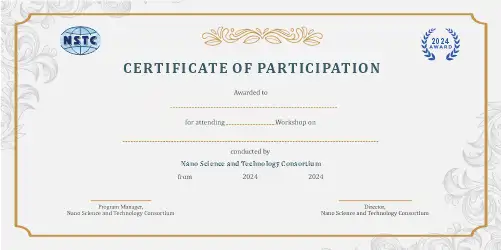
e-Certification + e-Marksheet
Tools
Generative AI, Large Language Models, Prompt Engineering, Scientific Writing, Literature Review, RAG, Data Analysis
Generative AI & LLMs Practicum for Science Course dives deep into Generative AI, Large Language Models, prompt engineering, research workflows, scientific writing, literature analysis, scientific data interpretation, and AI-assisted problem solving for science. Gain comprehensive expertise through our structured curriculum and hands-on approach. This practicum helps learners understand how to use Generative AI and LLMs responsibly for scientific research, academic productivity, experiment planning, technical documentation, data analysis, and scientific communication.
Foundations of Generative AI & LLMs for Science
- Understand how Generative AI and Large Language Models support scientific research, learning, analysis, and documentation.
- Learn key concepts such as prompts, tokens, context windows, model outputs, hallucination, reasoning, retrieval, and AI-assisted workflows.
- Explore practical uses of LLMs in biotechnology, healthcare, chemistry, materials science, environmental science, and data-driven research.
Prompt Engineering for Scientific Workflows
- Design clear and structured prompts for scientific explanations, summaries, comparisons, and research planning.
- Use role-based prompting, structured instructions, examples, constraints, and output formats for better AI responses.
- Build reusable prompt templates for literature review, hypothesis generation, protocol drafting, and scientific communication.
AI-Assisted Literature Review and Research Mapping
- Use Generative AI to summarize research articles, extract key themes, compare studies, and identify research gaps.
- Organize scientific knowledge into outlines, tables, concept maps, and structured review notes.
- Learn how to validate AI-generated literature summaries using source checking and human review.
Scientific Writing, Reports, and Documentation with LLMs
- Draft scientific abstracts, introductions, reports, explanations, lab notes, and technical summaries using AI assistance.
- Improve clarity, structure, grammar, readability, and scientific tone without changing the meaning of the content.
- Use LLMs for research proposal outlines, presentation scripts, manuscript planning, and documentation workflows.
LLMs for Scientific Data Interpretation
- Use AI to interpret tables, experimental observations, analytical summaries, and research datasets.
- Convert scientific data into readable explanations, insights, limitations, and decision-support notes.
- Understand the role of human validation when using AI for scientific data interpretation and reporting.
Retrieval-Augmented Generation for Scientific Knowledge
- Understand how Retrieval-Augmented Generation helps connect LLMs with trusted scientific documents and knowledge bases.
- Explore how RAG supports literature search, document Q&A, research summarization, and scientific decision support.
- Learn basic workflows for grounding AI responses in reliable scientific sources and reducing hallucination risks.
AI for Experiment Planning and Scientific Problem Solving
- Use Generative AI to plan experiments, prepare checklists, design workflows, and identify possible limitations.
- Generate structured research questions, hypotheses, variables, controls, and expected observations.
- Apply LLMs to simplify complex scientific concepts and support interdisciplinary problem solving.
Responsible AI, Research Ethics, and Quality Control
- Understand hallucination, bias, privacy, plagiarism, citation misuse, data sensitivity, and responsible AI practices in science.
- Learn how to fact-check AI outputs, verify scientific claims, and maintain academic integrity.
- Apply human review, source validation, and ethical documentation when using AI in scientific workflows.
Capstone: End-to-End Generative AI & LLMs Science Practicum Project
- Work on a complete science-focused AI workflow involving literature review, prompt design, data interpretation, and report creation.
- Create AI-assisted outputs such as summaries, research maps, experiment plans, documentation, and presentation material.
- Build a portfolio-ready practicum project demonstrating responsible and practical use of Generative AI and LLMs in science.
1. What is the Generative AI & LLMs Practicum for Science course about?
The Generative AI & LLMs Practicum for Science course focuses on using Generative AI and Large Language Models for scientific research, academic writing, literature review, data interpretation, experiment planning, and research documentation. Learners gain practical experience through science-focused AI workflows and hands-on projects.
2. Is this course suitable for beginners?
Yes, this course is suitable for beginners. It starts with the basics of Generative AI and LLMs, then gradually moves toward scientific applications such as prompt engineering, literature review, research mapping, lab documentation, and responsible AI use.
3. Why should science learners study Generative AI and LLMs?
Generative AI and LLMs can help science learners save time, understand complex concepts, organize research material, summarize scientific documents, prepare reports, and improve academic productivity. These skills are useful for students, researchers, faculty, and professionals working in science-driven fields.
4. What career benefits can this course offer?
This course can support career growth in research, academic writing, scientific communication, data analysis, AI-assisted research support, biotechnology, healthcare, education, and interdisciplinary science roles. It also helps learners build practical AI skills that can strengthen research portfolios, resumes, and professional profiles.
5. What tools and techniques will I learn?
Learners gain exposure to Generative AI, Large Language Models, prompt engineering, scientific writing, literature review workflows, research summarization, RAG concepts, document Q&A, experiment planning, scientific data interpretation, and responsible AI practices.
6. Does this course include hands-on projects?
Yes, the course includes hands-on practicum activities and a capstone project. Learners create AI-assisted research summaries, literature maps, prompt templates, experiment plans, technical notes, and science-focused documentation outputs.
7. What is the format of the Generative AI & LLMs Practicum for Science course?
The course is delivered online in a practical modular format. Learners study concepts step by step and apply them through prompt exercises, scientific examples, research workflows, assignments, and project-based learning.
8. Will I receive a certificate after completing this course?
Yes, learners receive NSTC e-Certification + e-Marksheet upon successful completion. This can be added to a resume, LinkedIn profile, academic portfolio, research profile, or professional profile.
9. Is Generative AI for science difficult to learn?
The course is designed to make Generative AI and LLMs approachable for science learners. With step-by-step guidance, practical examples, and hands-on workflows, learners can gradually build confidence in using AI responsibly for scientific tasks.
10. Who should join this course?
This course is ideal for science students, PhD scholars, researchers, faculty, academic writers, lab professionals, biotechnology learners, healthcare researchers, and professionals who want to use Generative AI and LLMs for scientific learning, research, and documentation.