
Sale!

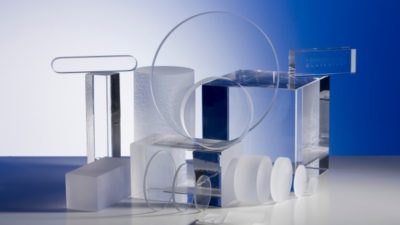
Miniaturization of Porous to Transparent Ceramics for Structural and Functional Applications
Original price was: USD $99.00.USD $59.00Current price is: USD $59.00.
Sterelithography, Cold Sintering, CNC Machining
Introduction to the Course
The Miniaturization of Porous to Transparent Ceramics course explores how advanced materials engineering is transforming ceramics from traditional porous structures to state-of-the-art transparent components with wide-ranging structural and functional applications. Ceramics are essential in industries from electronics and optics to aerospace and energy — and understanding how to control their microstructure, processing, and properties is key to unlocking new performance levels.
This program takes you from the fundamentals of ceramic materials and porosity control to modern fabrication techniques that enable optical transparency and miniaturization at fine scales. You’ll gain both theoretical foundations and practical insights into how ceramics can be engineered for next-generation applications.
Course Objectives
By the end of this course, learners will be able to:
- Understand the science of porous ceramics and how porosity affects material properties.
- Learn mechanisms of light scattering and how microstructure influences transparency.
- Explore miniaturization techniques and fabrication methods for advanced ceramic materials.
- Discover the practical applications of transparent ceramics in optics, defense, electronics, and energy systems.
- Gain skills in characterizing ceramics using modern tools and evaluating performance criteria.
What Will You Learn (Modules)
Module 1: Fundamentals of Ceramic Materials
- Overview of ceramic composition, crystalline structures, and classification of porous and dense ceramics.
- Role of porosity in mechanical, thermal, and optical properties of ceramic materials.
Module 2: Porosity and Material Properties
- Types of pores, how pore size and distribution affect strength and performance.
- Impact of porosity on light scattering and material behavior.
Module 3: Predictive Modeling for Behavioral Analysis
- Study of techniques for ceramic miniaturization, including nano- and microstructural control.
- Introduction to advanced fabrication methods such as cold sintering, additive manufacturing, and precision machining.
Final Project
In the concluding project, learners will design a miniaturized transparent ceramic component for a chosen application such as an optical window, sensor cover, or structural element — using material selection, processing routes, and characterization strategies covered in modules.
Who Should Take This Course?
- Materials Science and Nanotechnology Students
- Ceramic Engineers and Researchers
- Optical and Photonics Professionals
- Product Designers in Aerospace & Electronics
- Professionals in Advanced Manufacturing
- Anyone interested in advanced materials engineering
Career & Job Opportunities
After completing the course, you may pursue roles such as:
- Materials Engineer (Ceramics and Composites)
- Optical Materials Specialist
- Advanced Manufacturing Engineer
- Nanofabrication Engineer
- Research Associate in Materials Science
Why Learn With Nanoschool?
- Expert-Led Training: Learn from professionals with experience in advanced materials research.
- Hands-On Projects: Apply theory to real design and fabrication scenarios.
- Industry-Relevant Curriculum: Stay updated on cutting-edge ceramic technologies.
- Career Support: Get guidance as you prepare for roles in materials development.
Key Outcomes of the Course
- Understand how microstructure affects ceramic properties.
- Be able to design and evaluate porous and transparent ceramic systems.
- Gain insights into modern fabrication and characterization methods.
- Be ready for advanced research or engineering roles involving ceramic materials.
Related products
-

Exploring Green Nanotechnology for Sustainable Industrial Effluent Treatment
USD $59.00 USD $249.00Price range: USD $59.00 through USD $249.00 Select options This product has multiple variants. The options may be chosen on the product page -

Enhancing Drug Delivery Efficiency with Nano-Pharmaceuticals
USD $59.00 USD $249.00Price range: USD $59.00 through USD $249.00 Select options This product has multiple variants. The options may be chosen on the product page -

Nanoscale Sensitization Program
USD $59.00 USD $249.00Price range: USD $59.00 through USD $249.00 Select options This product has multiple variants. The options may be chosen on the product page -
Industry Program In Nanotechnology
USD $59.00 USD $249.00Price range: USD $59.00 through USD $249.00 Select options This product has multiple variants. The options may be chosen on the product page -

Nanotechnology in Oil Recovery: Revolutionizing Industrial Applications
USD $59.00 USD $249.00Price range: USD $59.00 through USD $249.00 Select options This product has multiple variants. The options may be chosen on the product page

What You’ll Gain
- Full access to e-LMS
- Publication opportunity
- Self-assessment & final exam
- e-Certificate
Reviews
There are no reviews yet.