
Rated Excellent
250+ Courses
30,000+ Learners
95+ Countries

Rated Excellent
250+ Courses
30,000+ Learners
95+ Countries
Original price was: USD $99.00.USD $59.00Current price is: USD $59.00.
Make Batteries Circular—Policy to Plant, End-to-End Standards
Battery Circularity: Recycling, Second-Life Integration, and Safety Standards is a 3-day, hands-on program designed to help participants implement practical circularity workflows across EV and energy storage batteries. The course covers the full lifecycle approach—from intake, testing, and grading of used packs to second-life integration in stationary ESS applications and selection of recycling pathways. Participants work with traceability frameworks such as the Battery Passport, apply design-for-disassembly principles, and align operations with key regulatory and safety requirements including EU Battery Regulation 2023/1542, EPR obligations, recycled-content targets, and major standards such as UN 38.3, IEC, UL, and NFPA. Outcomes include a circularity flow and compliance checklist, a grading decision sheet with an ESS proposal, and a recycling yield model supported by an EHS plan.
To equip participants with standards, data methods, and hands-on tools to operationalize end-to-end battery circularity—from testing and grading EV/ESS packs through second-life integration to recycling—while ensuring traceability (Battery Passport), regulatory compliance (EU 2023/1542, EPR, recycled-content targets), and safety across product and facility operations (UN 38.3, IEC/UL/NFPA).
Participants will be able to:
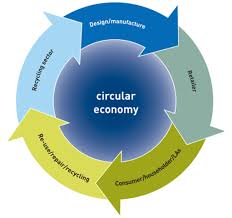
Map an end-to-end circularity workflow (intake → second-life integration → recycling).
Apply compliance requirements under EU Battery Regulation 2023/1542 and EPR frameworks, including recycled-content and reporting needs.
Implement traceability using Battery Passport concepts, serial/QR tracking, custody chain, and SoH/SoC data practices.
Apply design-for-disassembly principles and plan safe intake, packaging, and transport aligned with UN 38.3 and EHS practices.
Run and interpret grading tests, decide repurposing routes, and plan BMS updates and integration requirements.
Align second-life and recycling decisions with relevant IEC/UL/NFPA standards, compare recycling routes, and model yields and ESG implications through practical checklists and decision sheets.
Battery circularity value chain: EV/ESS → test/grade → second-life → recycling → cathode supply
Policy and compliance: EU Battery Regulation 2023/1542, EPR requirements, recycled-content targets
Traceability systems: Battery Passport, serial/QR identification, custody chain, pack history, SoH/SoC data fields
Design for disassembly: pack formats, fasteners, adhesives, BMS locks, and circularity KPIs and economics
Practical session: build a circularity flow and compliance checklist for a selected pack family
Intake and safety checks: EHS screening and transport readiness, UN 38.3 fundamentals
Testing and grading methods: OCV, DCIR, pulse tests, rapid SoH estimation, and aging model concepts
Repurposing strategies: module/pack pathways, re-binning, BMS reprogramming, cybersecurity considerations
Standards alignment: IEC 62619, UL 1973, monitoring expectations, documentation and warranty approach
Practical session: create a grading decision sheet using sample test data and develop an ESS configuration proposal
Recycling processes: pyro, hydro, and direct recycling; black-mass quality and recovery considerations
Yield and ESG modeling: recovery rates, energy and water inputs, LCA boundaries and reporting
Facility safety: de-energization, discharge, inerting, EHS planning, emergency response preparation
Standards and certifications: UL 9540/9540A, NFPA 855, IEC 62133, UN 38.3 transport alignment
Practical session: map a recycling route and yield model (LFP or NMC) and draft an EHS and standards plan
Battery and ESS engineers (design, testing, integration)
Second-life/repurposing teams, recyclers, refurbishers
OEMs, pack/module manufacturers, and BMS engineers
Compliance, QA/QC, policy and EPR leads; sustainability/ESG analysts
EHS and safety managers, facility operators, emergency planning teams
Utilities, EPCs, ESS integrators, microgrid developers
Investors and product managers in e-mobility and energy storage
Senior UG/PG students in Electrical, Chemical, Materials, and Energy disciplines





14 + years of experience
over 400000 customers
100% secure checkout
over 400000 customers
Well Researched Courses
verified sources
Reviews
There are no reviews yet.