
Sale!

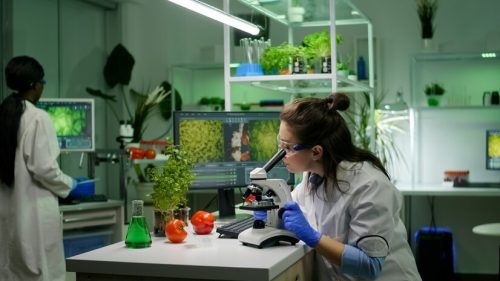
Applied Nanobiotechnology for Sustainable Biochemicals and Biofuels
Original price was: USD $99.00.USD $59.00Current price is: USD $59.00.
Applied Nanobiotechnology for Sustainable Biochemicals and Biofuels Course examines how nanoscale materials, catalytic systems, and bio-integrated nanostructures improve biochemical production, enzyme performance, and biofuel synthesis workflows. The course focuses on how nanotechnology interacts with biological systems to enhance reaction efficiency, yield, and sustainability.
About the Course
Biochemical manufacturing has become a central part of the global shift toward sustainable energy and green chemistry. Biofuels, bio-based polymers, and microbial chemical production are all part of this landscape. Nanomaterials such as nanoparticles, nanocatalysts, and nanoscale carriers can modify reaction environments at the molecular level. They can stabilize enzymes, enhance electron transfer, improve catalytic surfaces, and support microbial systems used in biofuel synthesis. This course introduces how these nanoscale tools interact with biochemical systems used in renewable energy and sustainable chemical production. The focus is on the interface between nanoscale materials and biological production systems the point where chemical engineering, biotechnology, and materials science converge.
Why This Topic Matters
Sustainable biochemical production is increasingly tied to energy transition strategies worldwide. Nanobiotechnology improves catalytic efficiency, stabilizes enzymes, enhances reaction environments, and increases yields, making it vital for biofuel synthesis, industrial bioprocess optimization, renewable chemical production, and environmental biotechnology.
What Participants Will Learn
• Understand nanomaterial interactions with biological systems
• Identify roles of nanoparticles, nanocatalysts, and nanocarriers
• Explain improvements in enzyme catalysis and metabolic processes
• Evaluate influence on microbial productivity and fermentation efficiency
• Analyze contributions to renewable energy and green chemistry
• Interpret environmental and economic implications
• Recognize industrial translation for biofuel and biochemical production
Course Structure
Module 1 — Nanobiotech Fundamentals for Biochemical Production
- Introduction to nanobiotechnology in biochemical engineering
- Nanoscale materials used in biochemical production
- Nanoparticles and nanocarriers in metabolic systems
- Interaction between nanomaterials and microbial pathways
- Reaction environments at the nanoscale
- Sustainability considerations in biochemical manufacturing
Module 2 — Nanotechnology Strategies for Biofuel Synthesis
- Nanomaterials in biofuel conversion processes
- Nanocatalysts for enhanced biochemical reactions
- Nanotechnology-assisted fermentation strategies
- Nanostructures in enzyme catalysis
- Microbial fuel cells and nanomaterial integration
- Process efficiency improvements in biofuel synthesis
Module 3 — Optimization, Evaluation and Industrial Relevance
- Process optimization using nanobiotechnology tools
- Performance evaluation in biofuel production systems
- Environmental impact and sustainability analysis
- Economic considerations of nanobiotech processes
- Industrial case discussions in biofuel and biochemical production
- Scaling nanobiotechnology approaches for real applications
Real-World Applications
Applications include biofuel production, microbial biochemical manufacturing, green catalysis, bioelectrochemical systems, and sustainable process engineering. Nanobiotechnology improves efficiency, yield, and environmental sustainability in these fields.
Tools, Techniques, or Platforms Covered
Nanoparticle synthesis
Nanocatalyst design
Nanocarrier systems
Enzyme catalysis systems
Metabolic engineering
Fermentation processes
Bioelectrochemical systems
Yield and productivity evaluation
Nanocatalyst design
Nanocarrier systems
Enzyme catalysis systems
Metabolic engineering
Fermentation processes
Bioelectrochemical systems
Yield and productivity evaluation
Who Should Attend
Target audience includes chemical and biochemical engineers, renewable energy professionals, researchers in nanobiotechnology or sustainable chemistry, students, and innovators developing bioenergy or biochemical technologies.
Prerequisites: Basic understanding of biotechnology, nanotechnology concepts, and familiarity with biochemical production. No advanced coding or mathematics required.
Why This Course Stands Out
This course uniquely focuses on the intersection of nanotechnology and bioprocess engineering for sustainable biochemical production. It connects nanoscale materials, enzyme catalysis, and microbial systems while addressing industrial, environmental, and sustainability implications.
Related products
-

Industry Program In Nanotechnology
USD $59.00 USD $249.00Price range: USD $59.00 through USD $249.00 Select options This product has multiple variants. The options may be chosen on the product page -

Nanomaterials from Waste: Production Techniques & Industrial Certification
USD $59.00 USD $249.00Price range: USD $59.00 through USD $249.00 Select options This product has multiple variants. The options may be chosen on the product page -

Nanotechnology in Aerospace: Driving the Future of Flight
USD $59.00 USD $249.00Price range: USD $59.00 through USD $249.00 Select options This product has multiple variants. The options may be chosen on the product page -

Carbon Fiber Reinforced Plastics (CFRPs)
USD $1,399.00 Enroll Now -
Enhancing Drug Delivery Efficiency with Nano-Pharmaceuticals
USD $59.00 USD $249.00Price range: USD $59.00 through USD $249.00 Select options This product has multiple variants. The options may be chosen on the product page

What You’ll Gain
- Full access to e-LMS
- Publication opportunity
- Self-assessment & final exam
- e-Certificate
Reviews
There are no reviews yet.