
Sale!

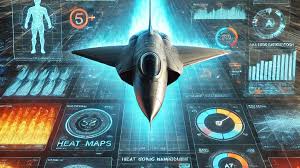
AI in Hypersonic Flight Control (Adaptive RL for Stability & Safety)
Original price was: USD $99.00.USD $59.00Current price is: USD $59.00.
AI at Hypersonic Speeds—Stability, Oversight, and Zero-Weapon Focus
About This Course
This 3-week intensive course on AI in hypersonic flight control focuses on applying adaptive reinforcement learning (RL) in a safety-first, non-weaponized context. Instead of controller design, it emphasizes hazard analysis, perception and state awareness, verification & validation (V&V) planning, governance, and human oversight—guiding participants to build practical artifacts like a requirements matrix, V&V plan, and assurance case for safe high-speed testing.
Aim
To provide a safety-first, non-weaponized framework for using AI and adaptive RL in hypersonic flight control—focusing on governance, assurance, and human oversight rather than controller design.
Course Objectives
-
Frame AI/adaptive RL for hypersonic flight within a safety-first, non-weaponized context.
-
Build and document hazards, oversight roles, abort criteria, and geofencing for high-speed test articles.
-
Specify perception and state-awareness requirements without exposing sensitive control algorithms.
-
Draft a V&V plan, test envelopes, and safety monitors for AI-enabled high-speed systems.
-
Outline a safety case and operator SOPs aligned with governance and certification thinking.
Course Structure
Module 1 – Safety, Ethics & High-Speed Flight Basics (Non-Weaponized)
-
Where AI fits in safety-critical aerospace: hazard analysis, “human-on-the-loop,” and oversight
-
High-level aerothermodynamics concepts (no design details): why high speeds amplify uncertainty and sensing challenges
-
Assurance artifacts: requirements traceability, safety cases, and model/system cards
-
Hands-on: Build a policy-aware requirements matrix and hazard log for a benign high-speed test article (e.g., generic aero model), focusing on oversight, abort criteria, and geofencing
Module 2 – Robust Perception & State Awareness (Conceptual)
-
Sensor integrity at high dynamic pressure: fault concepts, latency awareness, and graceful degradation (no algorithms)
-
Observability at a glance: what it means to estimate states safely without revealing implementation
-
Validation & test planning: scenario coverage, limits, and transparency for operators and regulators
-
Hands-on: Draft a V&V plan—define test envelopes, safety monitors, and operator intervention thresholds for a conceptual high-speed vehicle
Module 3 – Governance, Certification & Human Oversight
-
Standards and certification thinking for AI components (conceptual): documentation, audits, incident reporting
-
Envelope thinking without controllers: defining stay-out zones, rate limiters, and conservative defaults
-
Human-machine interfaces: alerting, explainability for operators, and abort workflows
-
Hands-on: Assemble an assurance case outline (safety case) with roles, evidence to collect, and an operator SOP for safe testing and shutdowns
Who Should Enrol?
-
Engineers & researchers in aerospace, mechanical, electrical, controls, or related fields
-
AI/ML & RL practitioners interested in safety-critical aerospace applications
-
Flight test, safety, governance, and certification professionals
-
Senior students, faculty, and industry R&D teams working on hypersonic or high-speed systems
Related products
-

Healthcare Innovation: The AI-Enhanced Entrepreneurship Course
USD $59.00 USD $249.00Price range: USD $59.00 through USD $249.00 Select options This product has multiple variants. The options may be chosen on the product page -

AI-Driven Cybersecurity Course
USD $59.00 USD $249.00Price range: USD $59.00 through USD $249.00 Select options This product has multiple variants. The options may be chosen on the product page -

AI in the Creative Arts Course
USD $59.00 USD $249.00Price range: USD $59.00 through USD $249.00 Select options This product has multiple variants. The options may be chosen on the product page -

Data Visualization using Pandas, Matplotlib and Seaborn Course
USD $59.00 USD $249.00Price range: USD $59.00 through USD $249.00 Select options This product has multiple variants. The options may be chosen on the product page -
Sale!

Scientific Paper Writing: Tools and AI for Efficient and Effective Research Communication
USD $39.00 USD $249.00Price range: USD $39.00 through USD $249.00 Select options This product has multiple variants. The options may be chosen on the product page

What You’ll Gain
- Full access to e-LMS
- Publication opportunity
- Self-assessment & final exam
- e-Certificate
Reviews
There are no reviews yet.