
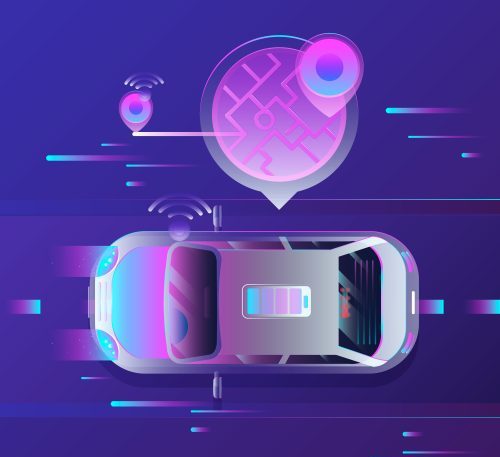
AI in Autonomous Vehicles
USD $59.00 USD $249.00Price range: USD $59.00 through USD $249.00
The program delves into the AI and robotics techniques that empower autonomous vehicles, including computer vision, object detection, sensor fusion from LIDAR and radar, and motion planning algorithms. This hands-on course also covers real-world challenges like obstacle avoidance, lane detection, and decision-making for AVs.
About the Course
Autonomous vehicles rely on artificial intelligence to perceive their surroundings, detect objects and obstacles, plan safe routes, make real-time driving decisions, and learn from changing environments. This course explores the full autonomy stack that powers modern intelligent mobility systems.
Participants will study how AI integrates into perception systems, sensor fusion pipelines, localization and mapping, planning, and control. The course also connects these concepts to Advanced Driver-Assistance Systems (ADAS), self-driving platforms, and intelligent transportation systems.
“Autonomous mobility is not just about making vehicles move on their own. It is about building intelligent systems that can sense, interpret, decide, and act safely in dynamic real-world environments.”
The program integrates:
- Perception systems for scene understanding
- Sensor fusion using LiDAR, radar, and camera data
- Localization and mapping concepts
- Planning and control pipelines
- Simulation-driven testing for autonomous systems
More precisely, the course focuses on building intelligent mobility solutions that operate safely, efficiently, and reliably across real-world transportation contexts.
Why This Topic Matters
The automotive industry is rapidly shifting toward:
- Autonomous driving
- Smart traffic systems
- Connected vehicle ecosystems
- Electric and intelligent mobility
AI enables reduced accidents, improved road safety, optimized traffic flow, efficient energy usage, and real-time decision-making. However, autonomous systems must also address safety-critical decisions, real-time processing constraints, sensor reliability, fusion complexity, and ethical or regulatory requirements. Professionals skilled in AI-driven mobility systems are increasingly in demand across automotive, robotics, and intelligent infrastructure sectors.
What Participants Will Learn
• Understand the AI architecture of autonomous vehicles
• Build perception models using computer vision
• Apply sensor fusion for scene understanding
• Develop motion planning and decision pipelines
• Implement control systems for navigation
• Explore reinforcement learning for adaptive driving
• Work with simulation tools for testing
• Understand safety, ethics, and regulations
• Design AI-driven autonomous vehicle systems
Course Structure / Table of Contents
Module 1 — Introduction to Robotics and Kinematics
- Fundamentals of robotics and mobility systems
- Motion and coordinate systems
- Sensors, actuators, and control mechanisms
Module 2 — Robot Control Systems and Motion Planning
- PID controllers and feedback systems
- Path planning algorithms
- Navigation and environment interaction
Module 3 — AI in Robotics: Machine Learning & Computer Vision
- AI for perception and environment understanding
- Object detection and tracking
- Vision-based navigation
Module 4 — Autonomous Systems & Reinforcement Learning
- Self-navigation and decision-making
- Reinforcement learning for adaptive control
- Intelligent system simulation
Module 5 — Sensor Fusion and Scene Understanding
- Combining LiDAR, radar, and camera data
- Data synchronization and fusion strategies
- Real-time perception pipelines
Module 6 — Planning and Decision-Making
- Route planning algorithms
- Behavior prediction and risk assessment
- Decision pipelines for autonomous vehicles
Module 7 — Simulation and Testing Environments
- Autonomous vehicle simulation platforms
- Scenario testing and validation
- Safety and reliability assessment
Module 8 — Ethics, Safety & Regulations
- Safety-critical system design
- Ethical considerations in autonomous driving
- Regulatory frameworks and compliance
Module 9 — Final Applied Project
- Design an autonomous system for a specific task
- Integrate perception, planning, and control
- Test in simulation environment
- Evaluate performance and safety
Real-World Applications
This course supports work in autonomous vehicle development, Advanced Driver-Assistance Systems (ADAS), robotics and mobility startups, smart transportation systems, automotive R&D teams, and simulation or testing environments. In research, it advances intelligent navigation and adaptive mobility systems. In industry, it supports the development of safer, smarter, and more responsive vehicles.
Tools, Techniques, or Platforms Covered
Computer Vision
Sensor Fusion
Reinforcement Learning
Motion Planning
Control Systems
Simulation Environments
Perception Frameworks
Autonomous Navigation
Sensor Fusion
Reinforcement Learning
Motion Planning
Control Systems
Simulation Environments
Perception Frameworks
Autonomous Navigation
Who Should Attend
This course is ideal for:
- AI & Machine Learning Engineers
- Automotive Engineers
- Robotics Engineers
- Data Scientists working with sensor data
- Students in AI, Robotics, or Automotive Engineering
- Technology enthusiasts interested in autonomous mobility
It is especially relevant for professionals aiming to work in intelligent transportation and robotics.
Prerequisites: Recommended basic understanding of AI or robotics and familiarity with programming concepts. Introductory knowledge of machine learning is helpful but not mandatory. No prior automotive industry experience is required.
Why This Course Stands Out
Many AI courses focus only on theory, while many automotive courses focus mostly on mechanical systems. This course bridges that gap by integrating AI perception systems, robotics and control, autonomous navigation pipelines, simulation-based testing, and safety-aware design. The final project requires participants to design a complete autonomous system, reflecting the workflow used in real-world mobility and robotics development.
Frequently Asked Questions
What is AI in autonomous vehicles?
It involves using machine learning, computer vision, and sensor data to enable vehicles to perceive, plan, and drive autonomously.
Does this course cover ADAS?
Yes. Advanced Driver-Assistance Systems are included as part of the course learning scope.
Is sensor fusion included?
Yes. Techniques for combining LiDAR, radar, and camera data are covered in the program.
Will I work on simulations?
Yes. Simulation environments are used for testing, validation, and autonomous system design.
Is reinforcement learning included?
Yes. Reinforcement learning is included for adaptive decision-making and control in autonomous navigation.
What is the final project about?
Participants design and simulate an AI-powered autonomous system for a real-world task, integrating perception, planning, and control.
| Category | E-LMS, E-LMS+Video, E-LMS+Video+Live Lectures |
|---|
Related products
-

AI for Fraud Detection in BFSI: Navigating Financial Integrity Course
USD $59.00 USD $249.00Price range: USD $59.00 through USD $249.00 Select options This product has multiple variants. The options may be chosen on the product page -

Quantum Machine Learning: Harnessing Quantum Computing for AI Course
USD $59.00 USD $249.00Price range: USD $59.00 through USD $249.00 Select options This product has multiple variants. The options may be chosen on the product page -

Tableau for Business Intelligence Course
USD $59.00 USD $249.00Price range: USD $59.00 through USD $249.00 Select options This product has multiple variants. The options may be chosen on the product page -

AI for Energy Sector
USD $59.00 USD $249.00Price range: USD $59.00 through USD $249.00 Select options This product has multiple variants. The options may be chosen on the product page -

AI for Business Automation: Streamlining Operations through Intelligent Solutions Course
USD $59.00 USD $249.00Price range: USD $59.00 through USD $249.00 Select options This product has multiple variants. The options may be chosen on the product page

What You’ll Gain
- Full access to e-LMS
- Publication opportunity
- Self-assessment & final exam
- e-Certificate