Rated Excellent
250+ Courses
30,000+ Learners
95+ Countries

Rated Excellent
250+ Courses
30,000+ Learners
95+ Countries
Original price was: USD $99.00.USD $59.00Current price is: USD $59.00.
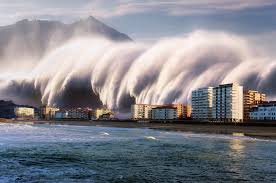
From waves to warnings: building AI pipelines for ocean risk.
The AI for Ocean Currents & Tsunami Early Warning Course teaches learners how artificial intelligence is used to monitor ocean currents, predict tsunamis, and support early warning systems. Ideal for environmental scientists, data analysts, and AI enthusiasts, this course provides practical skills to apply AI in oceanography, disaster management, and climate monitoring, ensuring real-world impact and societal relevance.
By the end of the course, participants will be able to:
Understand core coastal and tsunami physics, including shallow-water dynamics and bathymetry.
Ingest, QC, and align ocean observation data from sources like buoys, HF-radar, and satellite altimetry.
Benchmark traditional baselines (persistence, AR) against machine learning models like PINNs and FNOs.
Apply lightweight data assimilation methods (e.g., EnKF, 3D-Var) to improve forecasts.
Produce short-horizon forecasts with calibrated uncertainty (P10/P50/P90 outputs).
Detect tsunami-like anomalies and estimate ETA with uncertainty bands.
Evaluate model performance using metrics like CRPS, PR/ROC, and cost–loss analysis.
Build and operationalize a mini pipeline for tsunami forecasting and alert generation, complete with a one-page situation report.
Overview of ocean currents: surface currents, deep-water circulation, and tides.
Fundamentals of tsunami generation, propagation, and coastal impact.
Case studies: 2004 Indian Ocean tsunami, 2011 Japan tsunami, Pacific warning systems.
Ocean data sources: buoys, satellites, sonar, and seismic sensors.
Real-time data acquisition for ocean and seismic monitoring.
Challenges in ocean data quality, latency, and reliability.
Machine learning models for analyzing ocean current patterns.
AI-based anomaly detection in sea-level and pressure data.
Predicting ocean behavior using historical and real-time datasets.
AI models for tsunami detection and early warning signals.
Integrating seismic and ocean sensor data using AI.
Risk assessment and alert generation for coastal regions.
Visualizing ocean data using maps, graphs, and dashboards.
AI-driven decision support for emergency response planning.
Communicating early warnings to authorities and communities.
Design and develop an AI-powered system for tsunami early detection.
Integrate ocean sensor data, AI prediction models, and alert logic.
Present results with simulations, visual outputs, and technical documentation.
Graduates of this course can pursue roles such as:
By completing this course, you will:



14 + years of experience
over 400000 customers
100% secure checkout
over 400000 customers
Well Researched Courses
verified sources
Reviews
There are no reviews yet.