
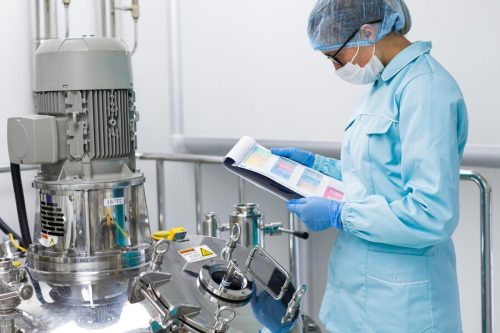
Advanced Bioprocess Engineering Course
Original price was: INR ₹11,000.00.INR ₹5,499.00Current price is: INR ₹5,499.00.
Advanced Bioprocess Engineering Course is a Advanced-level, 6 Weeks online program by NSTC. Master Advanced Bioprocessing, Biofuels Production, Biomanufacturing through hands-on projects, real datasets, and expert mentorship.
Earn your e-Certification + e-Marksheet in bioprocess engineering. Designed for biotechnology students, researchers, lab technicians, and life science graduates seeking practical biotechnology expertise in India.
- Overview of Bioprocess Engineering and Industrial Biotechnology
- Role of Bioprocessing in Pharmaceuticals, Food, Biofuels, and Biomanufacturing
- Key Concepts in Biological Production Systems
- Current Trends in Advanced Bioprocessing and Sustainable Manufacturing
- Microbial Cell Cultivation for Industrial Bioprocesses
- Mammalian, Plant, and Insect Cell Culture Applications
- Growth Kinetics and Nutrient Requirements
- Selection of Production Strains and Host Systems
- Principles of Bioprocess Design
- Media Design, Process Parameters, and Yield Optimization
- Batch, Fed-Batch, and Continuous Processing Strategies
- Process Development from Laboratory Scale to Pilot Scale
- Fundamentals of Fermentation Processes
- Bioreactor Design, Operation, and Configuration
- Aeration, Agitation, Mixing, and Mass Transfer
- Scale-Up Challenges in Fermentation and Cell Culture Systems
- Process Intensification in Modern Bioprocessing
- Optimization of Productivity, Yield, and Product Quality
- Design of Experiments for Bioprocess Improvement
- Data-Driven Approaches for Monitoring and Process Control
- Principles of Downstream Processing
- Cell Separation, Filtration, Centrifugation, and Clarification
- Chromatography, Purification, and Concentration Techniques
- Product Recovery for Biopharmaceuticals, Enzymes, and Industrial Bioproducts
- Introduction to Biomanufacturing Facilities and Workflows
- Good Manufacturing Practices and Quality Systems
- Process Validation, Documentation, and Batch Records
- Industrial Production of Biologics, Vaccines, Enzymes, and Bio-Based Products
- Bioprocess Engineering for Bioethanol, Biodiesel, Biogas, and Advanced Biofuels
- Feedstock Selection, Pretreatment, and Conversion Technologies
- Microbial and Enzymatic Routes for Biofuels Production
- Sustainability, Waste Valorization, and Circular Bioeconomy Applications
- Key Process Variables in Bioprocess Operations
- Sensors, Online Monitoring, and Process Analytical Technologies
- Automation in Bioreactor and Fermentation Systems
- Quality-by-Design and Real-Time Process Control
- Scale-Up Principles for Bioprocess Engineering
- Pilot Plant Operations and Industrial Translation
- Technology Transfer from R&D to Manufacturing
- Economic Feasibility, Cost Analysis, and Commercial Readiness
- Biosafety and Risk Management in Bioprocess Facilities
- Regulatory Requirements for Biomanufacturing
- Quality Control and Quality Assurance in Bioprocessing
- Environmental and Ethical Considerations in Industrial Biotechnology
- Designing a Complete Bioprocess Workflow
- Bioreactor Selection and Process Optimization Exercise
- Downstream Processing and Product Recovery Planning
- Final Case Study on Industrial Bioprocess Design and Scale-Up
Biofuels Production
Biomanufacturing
Bioprocess Design
Bioprocess Engineering
Fermentation Technology
Bioreactor Engineering
Microbial Cell Culture
Mammalian Cell Culture
Upstream Processing
Downstream Processing
Process Optimization
Process Analytical Technology
Quality-by-Design
Scale-Up and Technology Transfer
Good Manufacturing Practices
- Designing and optimizing industrial fermentation processes for enzymes, antibiotics, and bio-based products
- Developing biomanufacturing workflows for vaccines, biologics, and therapeutic proteins
- Scaling up laboratory bioprocesses into pilot plant and commercial production systems
- Improving biofuels production through microbial fermentation and sustainable feedstock conversion
- Applying downstream processing methods for purification and product recovery
- Using process monitoring and automation to improve bioprocess productivity and quality
- Supporting sustainable biotechnology, circular bioeconomy, and industrial biomanufacturing initiatives
- Designed for professionals working in biotechnology, biopharmaceutical manufacturing, fermentation industries, biofuels, food biotechnology, industrial microbiology, process engineering, quality assurance, and biomanufacturing operations.
- Designed for students, researchers, engineers, and postgraduate learners in biotechnology, biochemical engineering, chemical engineering, microbiology, life sciences, pharmaceutical sciences, bioengineering, and related fields.
Prerequisites: Foundational knowledge of biotechnology, microbiology, biochemical engineering, or process engineering is recommended. Prior exposure to fermentation, bioprocessing, or laboratory-scale biological production systems is helpful but not mandatory. Basic understanding of engineering principles and biological systems will support learning, while advanced concepts are introduced step-by-step during the course.
| Brand | NSTC |
|---|---|
| Format | Online (e-LMS) |
| Duration | 3 Weeks |
| Level | Advanced |
| Domain | Biotechnology, Life Sciences, Bioinformatics, Advanced Bioprocessing |
| Hands-On | Yes – Practical projects with industrial datasets |
| Tools Used | Python, R, BLAST, Bioconductor, ML Frameworks, Computer Vision |
Related products
-
Sale!

Original price was: INR ₹112.00.INR ₹59.00Current price is: INR ₹59.00. Add to cartVaccinology: Science, Innovation and Global Impact Course -
Sale!

CRISPR-Cas Genome Editing: Mechanisms and Applications Course
Original price was: INR ₹11,000.00.INR ₹5,499.00Current price is: INR ₹5,499.00. Add to cart -
Sale!

Smart Biomanufacturing with AI & Automation
Original price was: INR ₹4,999.00.INR ₹2,499.00Current price is: INR ₹2,499.00. Add to cart -
Sale!

3D Crime Scene Reconstruction and Imaging Cousre
Original price was: INR ₹11,000.00.INR ₹5,499.00Current price is: INR ₹5,499.00. Add to cart -
Sale!

AI for De Novo Drug Design | Generative AI Chemistry Course
Original price was: INR ₹11,000.00.INR ₹5,499.00Current price is: INR ₹5,499.00. Add to cart
Get in Touch