• Home
  • /
  • AI-Powered 3D Cell Culture, Organoids & Biofabrication: From Scaffold Design to Drug Screening
Biotechnology · Advanced · Video-based learning

AI-Powered 3D Cell Culture, Organoids & Biofabrication: From Scaffold Design to Drug Screening

Intersection of AI and biotechnology, emphasizing the innovative approach the workshop takes in using AI for advancing biological research.

Access 24/7 · 365 daysVideo lectures of 3+ hrsCertificate
Registration open

About This Course

This workshop provides a comprehensive introduction to the use of AI in designing and optimizing 3D cell culture systems, organoid models, and biofabrication processes. Participants will explore key applications in drug discovery, cancer research, regenerative medicine, and personalized treatments, with a focus on AI-based scaffold design, bioimage analysis, and drug response modeling.

Aim

This workshop aims to equip participants with the knowledge and hands-on skills required to develop AI-powered 3D cell culture models, organoids, and biofabrication systems. The focus is on using AI tools for scaffold engineering, tissue model optimization, bioprinting, bioimage analysis, and drug screening. Participants will learn how to integrate AI into life sciences workflows to improve research efficiency, predict drug responses, and advance personalized medicine.

Course Objectives

  • Understand AI-powered scaffold design and tissue model optimization.
  • Learn how to apply AI tools to bioimage analysis and cell segmentation.
  • Explore AI-driven bioprinting and organoid fabrication techniques.
  • Evaluate AI outputs for scalability, reliability, and biological relevance.
  • Develop practical strategies for implementing AI in 3D culture and organoid research.
Next: Syllabus →

Syllabus

📅 Day 1: AI-Enhanced Scaffold Design and 3D Cell Culture Systems

Focus
Understanding the fundamentals of AI-assisted scaffold design and its role in creating biologically relevant 3D cell culture environments.

Topics Covered

  • Introduction to 2D vs 3D cell culture models
  • Why 3D culture models are more representative of in vivo environments
  • AI-based scaffold material selection and optimization
  • Designing porous scaffolds for tissue engineering applications

AI Tools / Practical Tools

  • ChatGPT / Gemini: Scaffold design planning and material comparison
  • Tinkercad: 3D design of scaffold structures
  • OpenSCAD: Custom CAD tool for scaffold modeling
  • Google Colab: Python-based tools for scaffold simulation and nutrient gradient modeling

Hands-on Session

  1. AI-Assisted Scaffold Design: Participants will use AI prompts to compare scaffold materials like Matrigel, GelMA, and synthetic hydrogels for specific tissue applications.
  2. Basic 3D Scaffold Design: Hands-on creation of a simple porous scaffold using Tinkercad or OpenSCAD, focusing on design principles such as pore size and geometry.

📅 Day 2: AI in Bioprinting, Organoids, and Microfluidic Systems

Focus
Exploring the role of AI in bioprinting, organoid creation, and microfluidic systems for dynamic 3D culture environments.

Topics Covered

  • Introduction to 3D bioprinting and its applications in tissue engineering
  • AI-assisted optimization of bioprinting parameters for scaffold fabrication
  • Organoid creation: from stem cells to disease models
  • Microfluidic systems for simulating tissue behavior and drug responses

AI Tools / Practical Tools

  • Slic3r / UltiMaker Cura: 3D printing software for scaffold optimization
  • LangChain + Streamlit: AI-driven optimization of bioprinting parameters
  • Google Colab: Python-based simulations of perfusion in bioprinted scaffolds

Hands-on Session

  1. Bioprinting Path Optimization: Participants will import scaffold designs and optimize them using Slic3r and Cura, focusing on print path, layer height, and pore geometry.
  2. AI-Based Bioprinting Troubleshooting: Participants will use AI tools to diagnose and fix common bioprinting issues like nozzle clogging and shape fidelity.

📅 Day 3: AI-Powered Bioimage Analysis, Drug Screening, and Clinical Translation

Focus
Applying AI to analyze 3D cell culture images, predict drug responses, and understand the clinical applications of organoid models.

Topics Covered

  • AI-based bioimage analysis: segmentation, organoid boundary detection, and morphological analysis
  • Drug response modeling using organoids and spheroids
  • Translating research findings into clinical applications: personalized medicine and precision oncology
  • Clinical deployment of AI tools in drug discovery and patient-derived organoid testing

AI Tools / Practical Tools

  • Fiji/ImageJ: AI-assisted microscopy image analysis
  • Cellpose: AI-based cell segmentation tool
  • DeepImageJ: Deep learning-based image segmentation
  • Google Sheets / LibreOffice Calc: Analyzing drug response data and calculating IC50 values

Hands-on Session

  1. AI-Powered Organoid Segmentation: Participants will segment and analyze organoid images using Fiji/ImageJ, Cellpose, or DeepImageJ.
  2. 3D Dose-Response Analysis: Using drug response data, participants will calculate IC50 values and compare responses in 2D vs. 3D models.

Who Should Enrol?

  • Undergraduate/postgraduate degree holders in Bioinformatics, Biotechnology, Biomedical Sciences, Data Science, Computer Science, Healthcare Management, or related fields.
  • Professionals in healthcare, pharma, biotech, diagnostics, clinical research, and biomanufacturing.
  • AI/ML engineers, data scientists, and automation specialists with an interest in AI-driven workflows for 3D culture systems, organoid research, and drug discovery.
  • Individuals passionate about the integration of AI in advancing biotechnology and precision medicine.

Course Outcomes

  • Design AI-powered 3D cell culture systems and organoid models
  • Apply AI tools for scaffold design, optimization, and drug response prediction
  • Analyze microscopy images and quantify organoid morphology using AI-based techniques
  • Build practical roadmaps for deploying AI-driven 3D culture and biofabrication systems in research and clinical settings
  • Understand how AI can optimize workflows in drug discovery, personalized medicine, and biotechnology
Next: Mentor →

Meet Your Mentor(s)

Mentor Photo

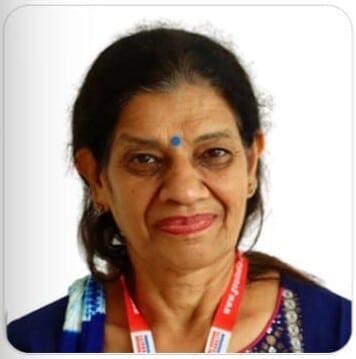
Prof. Kumud Malhotra

Professor & Dean

Prof. Kumud Malhotra, Dean of the University Institute of Physical and Life Sciences with 30 years of experience is an academician and administrator and has attained the highest echelons in the educational sector by managing senior positions, like Director, Dean, Managing Editor, or Editor-in-Chief . . . for content development and journal publication. She completed her Ph. D on “Genetic Epidemiology of Malaria in Some Population Groups of Delhi and Tribal Groups of Tarai Region of Nainital District” and Post Doctorate from Delhi University as an ICMR and UGC fellow.
Her expertise domains are Biotechnology, Genetics, Bioinformatics, Forensic  Science, Molecular Biology, and its allied areas. She has obtained Certifications in the areas of Genetic Engineering, Molecular Biology, Microarrays, Proteomics, and Parasitology from IGIB, NICD, MRC, and Delhi University. Down the lane, her achievements and accolades are the best employee and faculty while working at Bioinformatics Institute of India and RNB GLOBAL University as a Dean and other prestigious awards. Her contribution to the establishment of the School of Basic and Applied Sciences and Agricultural Sciences along with the approval from ICAR at the new University RNBGLOBAL
University was acknowledged by the Management.
Apart from teaching and academics her experience in content development and e-learning for various renowned universities and organizations like Banasthali Vidyapith, GOLS Academy, Biionline, etc. is an added credential of hers. Dr. Kumud Malhotra has been a Resource Person in Course Development Committees (for graduate and post-graduate programs) for Indira Gandhi National Open University (IGNOU), Jamia Hamdard along with other credits like Member of various committees like Academic Council, BOS, Research Committee, etc. for the IGNOU, IAMR. She has demonstrated caliber as a resourceful Technical Collaborator for the conduction of the Workshop on Bioinformatics at
Bundelkhand University and in Engineering College in Durg, Chhattisgarh with an appreciation letter from the university.
She is a member of the editorial board of various journals and has presented Papers at International Conferences on Genetics, Parasitology, Clinical Trials, Pharmacovigilance, Biotechnology, etc. Dr. Malhotra has delivered keynote addresses at CII, International Conferences, and member of various professional bodies Genetics Society, Indian Science Congress, International Society for Malariology and Parasitology, IAA, SBTI, etc. She has guided many students for Ph.D. and internships and got the projects from ICMR.

Next: Fees →

Course fee

Learners in India

₹2,499

Learners outside India

$50

  • Video lectures
  • Study material
  • Certificate after completion
  • 365-day access

Enrol in the course

Next: FAQ →

Frequently asked questions

How is this course taught?

Through recorded video lectures from the original live workshop, with the study material. Watch at your own pace, any time.

How long do I have access?

365 days from your registration, on your NanoSchool dashboard.

Do I get a certificate?

Yes, an e-certificate after completion, with a QR code anyone can verify and an "Add to LinkedIn" button.

How can I pay?

By card, UPI or PayPal on the payment page; international bank transfer is also available there.

What is the refund policy?

See our Returns, Refunds & Cancellation policy: Returns, Refunds & Cancellation policy

Need Help?

We’re here for you!


(+91) 120-4781-217
WhatsApp +91 99581 61117

Registration open

More upcoming workshops

Live, mentor-led and certified. Dates and times in IST.

See all workshops
Support