
Aim
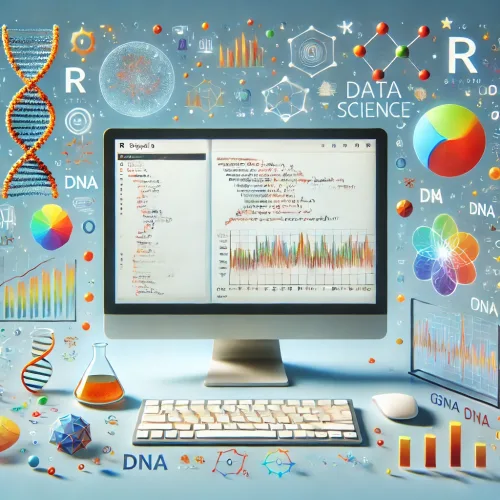
This course focuses on R programming as a powerful tool for data analytics in bioinformatics. Participants will learn to apply R for analyzing biological data such as genomic sequences, gene expression data, and protein structures. The course provides a practical introduction to statistical methods, visualization, and data manipulation using R, with applications specifically geared towards bioinformatics.
Program Objectives
- Learn the basics of R programming and how to use it for data manipulation and analysis in bioinformatics.
- Explore statistical methods commonly used in bioinformatics, such as hypothesis testing and regression analysis.
- Understand how to process and analyze large biological datasets like gene expression data, next-generation sequencing (NGS) data, and protein structure data.
- Gain hands-on experience using R libraries like ggplot2, dplyr, and Bioconductor for data visualization, manipulation, and analysis in bioinformatics contexts.
- Learn how to integrate bioinformatics data with statistical models for insights into biological questions.
Program Structure
Module 1: Introduction to R Programming
- Overview of R programming language and its significance in bioinformatics.
- Introduction to R Studio and basic programming concepts: variables, data types, functions, loops, and conditionals.
- Hands-on exercise: Writing your first R script and performing basic data manipulations.
Module 2: Data Manipulation in R
- Introduction to dplyr and tidyr packages for data cleaning and manipulation.
- Transforming biological data: subsetting, filtering, sorting, and reshaping datasets.
- Hands-on exercise: Using dplyr to clean and manipulate genomic data.
Module 3: Statistical Methods in Bioinformatics
- Introduction to statistical methods in bioinformatics: hypothesis testing, t-tests, ANOVA, and chi-square tests.
- Regression analysis for predicting biological outcomes from gene expression data.
- Hands-on exercise: Performing basic statistical analyses on genomic datasets using R.
Module 4: Data Visualization with R
- Introduction to data visualization with ggplot2 for creating informative plots.
- Visualizing gene expression data, sequence alignments, and molecular data.
- Hands-on exercise: Creating bar plots, scatter plots, and heatmaps for bioinformatics data.
Module 5: Bioinformatics Data Analysis Tools in R
- Exploring Bioconductor for handling biological data, such as microarray and NGS data.
- Gene expression analysis: Identifying differentially expressed genes using RNA-Seq data.
- Hands-on exercise: Analyzing gene expression data using limma and edgeR packages in R.
Module 6: Advanced Topics in R for Bioinformatics
- Integrating R with external bioinformatics tools (e.g., BLAST, FASTA, and GenBank).
- Protein structure analysis and visualizing 3D molecular structures in R.
- Introduction to R Shiny for building interactive web applications for bioinformatics data analysis.
Module 7: Final Project
- Design and implement a complete bioinformatics analysis pipeline using R.
- Apply techniques learned throughout the course to analyze a biological dataset (e.g., RNA-Seq, genome sequencing, or protein structure data).
- Example projects: Gene expression analysis in cancer, protein structure prediction, or functional genomics analysis.
Participant Eligibility
- Students and professionals in bioinformatics, biology, computer science, and related fields.
- Data scientists and researchers who want to apply R programming to biological and healthcare data.
- Anyone interested in learning how to manipulate, analyze, and visualize biological data using R in the context of bioinformatics.
Program Outcomes
- Gain proficiency in R programming and its application to bioinformatics data analysis.
- Ability to preprocess, analyze, and visualize biological datasets using R and R packages.
- Understand the application of statistical methods and machine learning in bioinformatics research.
- Experience using advanced bioinformatics tools in R for genomic data analysis, including RNA-Seq and protein structure analysis.
- Hands-on experience with real-world bioinformatics datasets and practical applications of R in biological research.
Program Deliverables
- Access to e-LMS: Full access to course materials, resources, and video tutorials.
- Hands-on Projects: Implement and apply bioinformatics techniques using real-world datasets.
- Final Project: Apply R programming to solve a bioinformatics problem and present your findings.
- Certification: Certification awarded after successful completion of the course and final project.
- e-Certification and e-Marksheet: Digital credentials provided upon successful completion.
Future Career Prospects
- Bioinformatics Analyst
- Computational Biologist
- Genomics Researcher
- Data Scientist in Healthcare
- Biostatistician
Job Opportunities
- Bioinformatics Companies: Developing software solutions for genomic data analysis.
- Healthcare Organizations: Analyzing genomic data for precision medicine and personalized healthcare.
- Research Institutions: Conducting computational biology and bioinformatics research.
- Pharmaceutical Companies: Using bioinformatics to discover new drugs and treatments.





Reviews
There are no reviews yet.